Healthcare
Manage shared and administrative healthcare endpoints with less friction.
FileWave helps healthcare IT manage shared workstations, carts, tablets, administrative devices, lab endpoints, and distributed locations. It gives IT practical control over deployment, patching, reporting, inventory, and remote support for the devices healthcare teams depend on every day.
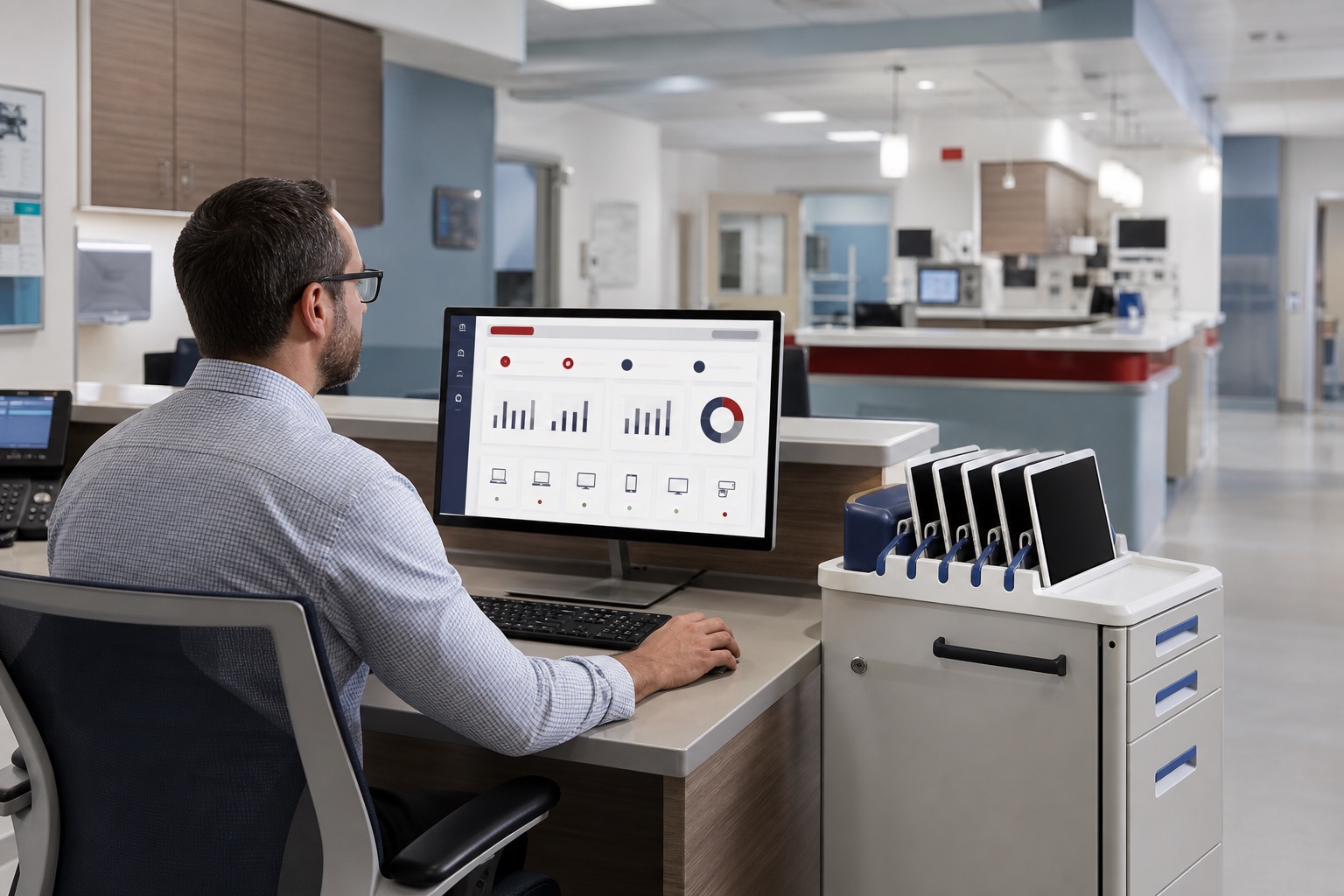
Endpoint workflows
Practical endpoint workflows for healthcare teams.
Shared healthcare endpoints
Keep shared devices, carts, workstations, and tablets visible and manageable.
Administrative fleets
Manage the laptops, desktops, mobile devices, and applications that support daily healthcare operations.
Compliance support
Use endpoint inventory, patch status, and reports to help answer operational and security-review questions.
Healthcare endpoint operations
Keep shared devices, patches, inventory, and support visible.
Shared healthcare devices
Group workstations, carts, tablets, and administrative endpoints by location, role, or use case so updates and support stay targeted.
Patch windows and visibility
Coordinate software and OS updates around operational windows, then use reports to find devices that still need attention.
Operations and security evidence
Use reports to show device state, patch posture, and software inventory for security and operations reviews.
Healthcare endpoint work FileWave supports
- Deploy software, settings, updates, and content to the right groups without hands-on work for every device.
- Track device status, installed software, operating systems, and patch levels across locations.
- Support distributed users with remote-control workflows when appropriate.
- Use reporting to reduce the time spent gathering evidence for security, compliance, and operations teams.
Good-fit environments
- Hospitals, clinics, labs, and distributed care organizations.
- Teams balancing clinical urgency with endpoint control.
- IT groups that need mixed-fleet management across shared and assigned devices.
In practice
How FileWave helps in practice.
A healthcare IT team can use FileWave to keep shared workstations consistent, update administrative devices, and support remote users without waiting for every device to come back to a central office. If a clinic needs a software update or a device group is missing a patch, IT can see the gap and act on it.
The value is fewer blind spots across shared, administrative, and distributed healthcare endpoints.
Explore more
Explore the FileWave capabilities behind this workflow.
FileWave brings enrollment, software and content deployment, patching, inventory, reporting, TeamViewer Remote Control, Self-Service Kiosk/App Portal, REST API, IdP SSO, and hosted or self-managed deployment options into the same practical endpoint management story.
Talk to FileWave
Talk healthcare endpoint operations.
Share the device mix, deployment model, and operational goals. FileWave can help map the right evaluation path.
Common questions
Common questions for evaluators and admins.
How can FileWave support healthcare IT?
FileWave can help healthcare IT manage clinical, shared, and administrative endpoints with deployment workflows, patching, inventory, reporting, and remote support visibility.
Does FileWave replace healthcare compliance programs?
No. FileWave provides endpoint controls and evidence that can support healthcare IT processes, but compliance depends on broader organizational governance.
Why are shared devices important in healthcare?
Healthcare environments often rely on shared workstations, mobile devices, and distributed endpoints, so lifecycle visibility and consistent management are operationally important.